As a field often considered minor in comparison with painting and sculpture, photography had to find its place at the Musée d’Orsay while interacting with the other disciplines in a museum conceived as a meeting point for the arts of the nineteenth century. Leaving photography out of the period 1848–1914, when it embodied a form of visual modernity, would have left a troubling gap in the artistic and intellectual programme of the museum devised by Michel Laclotte, then chief curator of the Musée du Louvre’s painting department as well as head of the team planning the Musée d’Orsay.1 In 1978, Françoise Heilbrun was appointed curator of photography, a post she held until her retirement in 2011; Philippe Néagu joined her in 1982 and remained until his premature death in March 1994. What was highly novel at the Musée d’Orsay, compared with the slow accretion of photography collections in other museums and libraries since the nineteenth century, was the formation of a collection from scratch – it was ‘created ex nihilo starting in 1979, thanks to special funding, gifts, deposits and allocations from other institutions’2 but also ex abrupto, in other words intensively and with remarkable speed. When the Orsay opened to the public in 1986, the collection already numbered 10,000 items – by far the museum’s largest collection3 – and it grew to 36,000 by 19954 before reaching nearly 50,000 by 2008.5 More than 30,000 items were therefore acquired between 1979 and 1994, at a particularly rapid pace between 1981 and 1988 (fig. 1).
Fig. 1
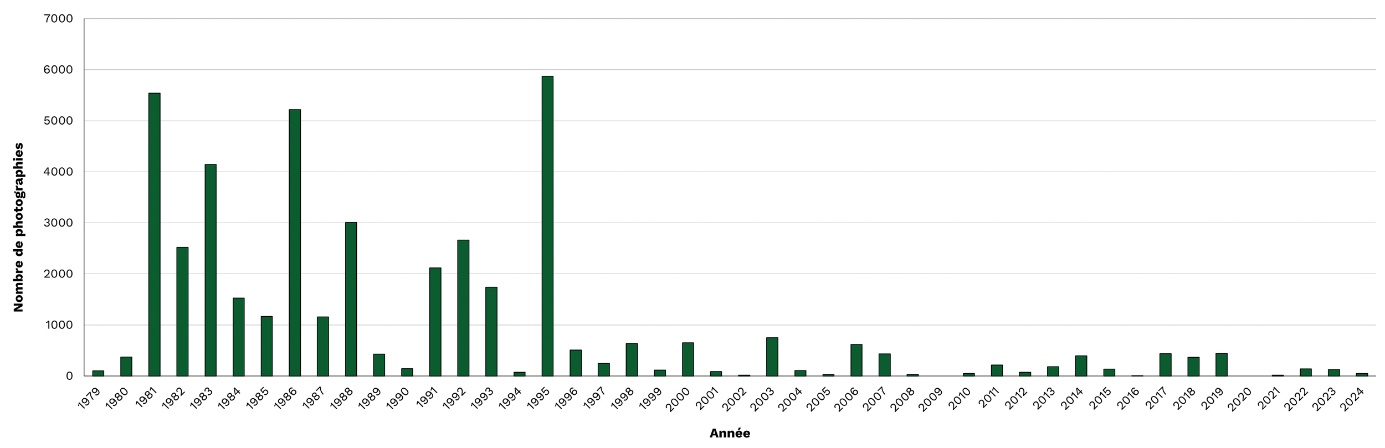
Photographs entering the Musée d’Orsay’s collection by year.
Note: These annual figures were obtained by querying the museum collections’ online catalogue, using an advanced search by year of acquisition. They may differ from the figures published in 1983, 1986 and 1995, which were intended to give an overall sense of the collection’s scale. As major gifts or groups of works had not yet been inventoried item by item, the figures in the graph are higher than those reported at the time.
Courtesy of Éléonore Challine
What mattered more than the numbers, however, was the fresh, unencumbered perspective on photography that would emerge at the Orsay as part of a broader movement embracing the so-called minor disciplines (decorative arts, cinema, etc.) and other styles (pompier, academic painting, etc.) that had been rejected by modernist art history.6 Photography would thus ‘no longer be confined to documentation, bibliophilic scholarship or the history of successive processes.’7 Instead, the aim was to present photography to the public as an art form in its own right, revealing the beauty and distinctive character that set it apart from the other arts – what the curators would call ‘the photographic vision’.
To date, the history of the Musée d’Orsay’s photography collection has been written from the perspective of the curators responsible for them. Françoise Heilbrun, for example, has outlined its main developments and rationale on several occasions. Focusing on a specific period – the formative years from 1978 to 1994 – and on two key figures (fig. 2), this article will explore what it meant to establish an institutional photography collection, both for the Musée d’Orsay and in the wider cultural landscape, in theory as well as in practice. It will examine the acquisitions that were conceivable and their possible sources, the form the collection would ultimately take and the history of photography it would serve, at a time when the field was only just emerging in academia.
Fig. 2

Martine Franck, portrait of Françoise Heilbrun and Philippe Néagu at the Musée d’Orsay, ca. 1989, private collection. Photograph courtesy of Chryséis Néagu.
Photo © Martine Franck / Magnum Photos
This study draws on the museum’s annual activity reports, its inventory and online database, and documents held at the Archives Nationales and the Commission Nationale de la Photographie, but also places special focus on information shared by generations of curators and documentation staff who have worked on the photography collection over the years.8 Together, their contributions form an oral history – woven from more personal accounts and memories, descriptions of work carried out at the institution and reflections on directions, decisions and lived realities – that lends substance and sensitivity to the history of the Musée d’Orsay’s photography collection.
The Orsay Effect on the Photographic Landscape
The creation of the Musée d’Orsay’s photography collection fulfilled expectations and hopes that had been developing for more than a century, in particular since the interwar period:9 early photography was beginning to enter art museums, not merely as documentary material but as a means of expression in its own right. A few years earlier, in 1977, the Centre Pompidou, where twentieth-century photography would gradually assume its full importance, had opened. Its photography collection was not officially established until 1981, however, and thus developed in parallel with that of the Musée d’Orsay. Before this, France had seen only private initiatives, such as the Musée Français de la Photographie de Bièvres, founded in 1960, or municipal ones, such as the Musée Nicéphore-Niépce in Chalon-sur-Saône, in 1972. Nevertheless, growing public-sector involvement was already apparent in the 1970s, with support for the creation of the Rencontres d’Arles in 1970, plans for a Fondation Nationale pour la Photographie (opened in 1978) and the establishment of a photography inspectorate at the Ministry of Culture.
The Musée d’Orsay’s photography collection was formed in a context of rediscovering existing photography collections, rather than in a heritage vacuum. A new generation of curators interested in photography would enable these neglected holdings to flourish; they included Marie de Thézy at the Bibliothèque Historique de la Ville de Paris, Hélène Pinet at the Musée Rodin, Catherine Mathon at the École Nationale Supérieure des Beaux-Arts, Françoise Reynaud at the Musée Carnavalet and Sylvain Morand at the Musées de Strasbourg. Published from 1983 to 1986, the journal Photographies, supported by the Ministry of Culture, with Jean-François Chevrier as editor-in-chief, testifies to the vitality surrounding photography in the early 1980s.10
The collection was also developed in relation to the holdings of the Bibliothèque Nationale de France (BNF). In the late 1970s, this institution was still ‘a very austere place, frequented by scholars’.11 Interest in photography had been championed there since the interwar period by two young curators trained as art historians, Jean Adhémar and Jean Prinet, who after the Second World War had worked both to secure major acquisitions (Cromer in 1945, Nadar in 1950 and the Sirot collection in 1955–1956) and to exhibit photography (Un siècle de vision nouvelle12 in 1955 and Nadar in 1965). By the late 1960s, there was a clear drive to engage seriously with photography, with Jean-Claude Lemagny focusing on contemporary work and Bernard Marbot on earlier photography. In 1971, the BNF opened a permanent photography gallery.13 The institution was hampered less by any lack of determination than by insufficient resources for dealing with the sheer scale of a photography collection numbering several million prints.14 The Musée d’Orsay’s high media profile and considerable financial resources could therefore occasionally seem enviable by comparison.
From the perspective of institutions already established in the field, ‘the Orsay effect’ was twofold: a form of competition arose that acted as a spur and helped to ‘enhance the value of early photography wherever it was held.’15 The Orsay’s own collection, late-arriving and retrospective, had to be built in relation to those already in existence while also breaking new ground in France: ‘As the newest of the French public collections, those of the Musée d’Orsay needed to complement existing holdings while presenting a coherent picture of photography’s formal evolution.’16 In practice, the Orsay worked to shine a light on elements that may have already been present in other collections but remained latent: foreign photographs, for example, were more often poorly catalogued or little known than actually absent from the BNF’s collections.
This competitive impulse was also becoming apparent in other countries. A similar movement was under way in North America, with the development of photography collections at the J. Paul Getty Museum in Los Angeles, the Art Institute of Chicago, the Metropolitan Museum of Art (the Met) in New York and the Centre Canadien d’Architecture in Montreal. More than with their French counterparts, the Musée d’Orsay’s curators sought to compete with US institutions and bring the collection up to the standard of American photographic holdings – the Museum of Modern Art (MoMA) in New York, for example, had established its photography department early on, in 1940. The United States was then one of the few places in the world where the history of photography could be studied at university, making it a natural destination for Françoise Heilbrun, a young curator who was still unfamiliar with the medium’s history. As she recounted in a 2007 interview with François Brunet, she travelled there to further her knowledge of the field.17 The Archives Nationales hold a report in which she relates her experience.18
Two Curators with a Passion for Photography
Born on 1 April 1946 to a Parisian antiquarian bookseller,19 Françoise Heilbrun began her career in the documentation section of the Louvre’s painting department from 1970 to 1973, where she met Pierre Rosenberg, then a curator there, and Michel Laclotte, the department’s director, before passing the competitive examination for curators of the Musées Nationaux in 1977.20 From September 1977 to May 1978, on Rosenberg’s advice, she attended Peter Bunnell’s classes at Princeton University, which she found ‘remarkable for their very solid historical and bibliographical grounding.’21 There she discovered the photography of Alfred Stieglitz, Edward Steichen and Paul Strand, as well as the journal Camera Work, all of which would later feature prominently in her work at the Musée d’Orsay.
Above all, however, this year abroad offered her the opportunity to undertake a kind of Grand Tour of American institutions with photographic holdings, allowing her to ‘see public and private collections, exhibitions and galleries, and make contact with dealers and photographers.’22 She travelled to New York, where she met Sam Wagstaff23 and Harry Lunn, with whom she remained close. In Chicago, she saw André Jammes’s exhibition Niepce to Atget24 and the Art Institute’s collection. In February, she attended a symposium in Washington, DC, and discovered the public collections there, then returned to New York, where she followed the many photography sales held in May. She also spent ten days at the George Eastman Museum in Rochester and a day in Minneapolis. From every place she visited, she brought back ‘the collection catalogue when one existed, and created artist information sheets in the other cases. Naturally, whenever [she] could, [she] met the curators and directors, with whom [she] developed an excellent rapport.’25
She met John Szarkowski and Maria Morris Hambourg at MoMA, Weston Naef at the Met, Julia Van Haaften at the New York Public Library, where an inventory of its photographic holdings was under way, Ken Lof at Columbia University, Gerald Maddox and Allan Fern at the Library of Congress and David Travis (who became a friend) at the Art Institute of Chicago. She sought out several acquaintances of her father, including a curator at the National Gallery of Art (Washington, DC) and the chief curator of the Newberry Library (Chicago). She also visited gallery owners and antiquarian booksellers in New York. In this way, Heilbrun began to build her own American network, drawing on her family’s ‘contacts in the world of antiquarian booksellers and bibliophiles, most particularly Nicolas Rauch – whose wife Marguerite Millau [sic] had been a major collector of early photography – and André Jammes.’26
Heilbrun found that the United States was a country where photography ‘was taken very seriously’ and ‘immediately regarded as an art form.’27 She was struck by the vitality of all the collections she visited. In her report, she noted that she still needed to ‘learn about the situation in France’ and ‘study the collections in Paris’, and planned ‘fairly soon to produce a monograph on a major French photographer of the early nineteenth century.’28 She was still unsure which photographer she would choose – it would ultimately be Charles Nègre – but this American experience shaped both her way of seeing and her taste in photography.
In 1982, Heilbrun was joined at the Musée d’Orsay by Philippe Néagu, whose knowledge of early photography was probably more extensive than her own. An occasional photographer and a collector himself,29 he was born in Paris on 30 August 1943 into a family of musicians of Romanian descent. His grandfather, Sava Néagu, conducted a Romani orchestra in Paris; his father, Eugène Néagu, born in Russia and also a musician, was naturalised in 1950 together with his wife. After studying art history at the Institut d’Art et d’Archéologie de Paris from 1964 to 1970, working under contract in the Louvre’s painting department in 1968 and then completing a placement in the same department in 1971, he passed a competitive examination for administrators.30 From 1973 to 1981, he headed the Archives Photographiques des Monuments Historiques,31 where he brought the collection to greater prominence32 and designed exhibitions on Nadar’s portraits and the Mission Héliographique.33 He authored research on Charles Méryon’s voyage to Oceania and Victor Hugo’s photographic circle,34 and was recognised as one of the few French experts on nineteenth-century photography (alongside Bernard Marbot at the BNF and Michel Quétin at the Archives Nationales and Archives de France). His standing in the field is reflected in a forthright assessment by art historian and theorist Jean-François Chevrier, who remarked on ‘the extraordinary lack of culture in photographic circles – apart from a few outsiders concerned with nineteenth-century photography, such as Philippe Néagu or André Jammes.’35 Néagu benefitted from this reputation in the early 1980s, for instance joining the editorial board of Photographies, the journal Chevrier oversaw, and in 1986 became a member of the Musée National d’Art Moderne’s acquisition committee.
When Néagu joined the Musée d’Orsay in 1982 as senior assistant for the photography collection (later becoming a curator), he was already working with Heilbrun on a regular basis.36 They co-authored several articles, the earliest of which includes ‘Baldus, paysages, architectures’ (1983),37 as well as numerous exhibition catalogues and books. Interviewed in 1986 for the journal Alma, he chose as his favourite photograph in the collection a portrait of Adèle Hugo with downcast eyes taken during her family’s exile on the island of Jersey (fig. 3), saying, ‘It is a wonderful portrait, a wonderful image, a wonderful document.’38 Partners both in work and in life, Heilbrun and Néagu devoted themselves to building the collection, with ongoing support from Laclotte, who showed ‘remarkable understanding’ of the discipline,39 and later with the backing of Françoise Cachin, who directed the museum from 1986 to 1994. Together, they created powerful momentum for photography at the Musée d’Orsay.
Fig. 3
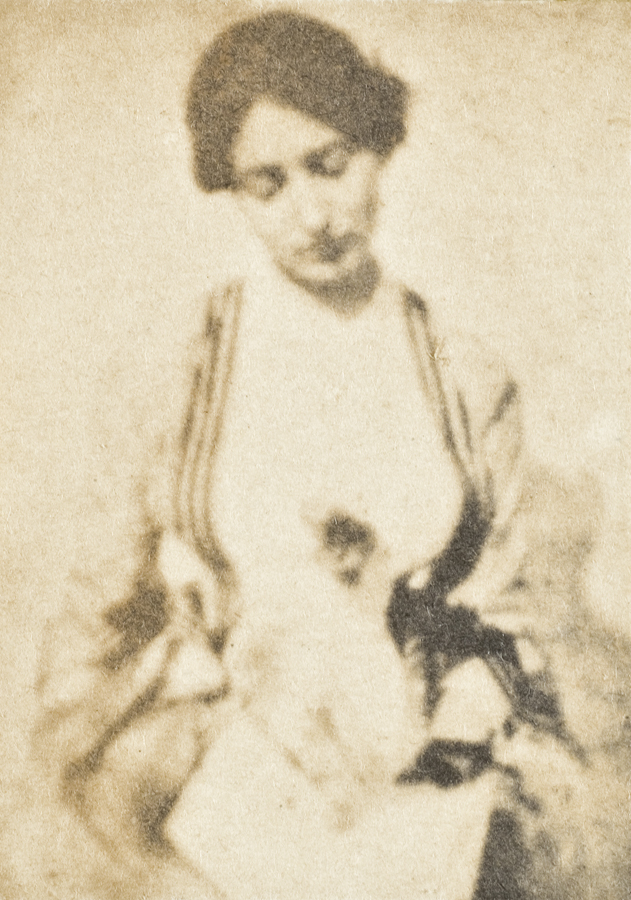
Auguste Vacquerie, Adèle with Downcast Eyes, 1853, salt print, 3.0 × 2.0 cm, Paris, Musée d’Orsay, gift, 1986, PHO 1986 123 100.
Photo © Musée d’Orsay (dist. GrandPalaisRmn) / Patrice Schmidt
Early Acquisitions
In 1979, Heilbrun made her first acquisition: an album by Alphonse de Brébisson, an amateur photographer from Normandy, containing numerous photographs by ‘French primitives’.40 Françoise Le Coz, hired that year to document the photography collection, recalls being deeply affected as she leafed through its pages.41 The following year, Heilbrun organised Charles Nègre, photographe, the Musée d’Orsay’s first planning-phase photography exhibition, presented at the Musée Réattu in Arles and then at the Musée du Luxembourg in Paris. It focused on ‘Nègre’s creative work as a photographer’42 and on previously unseen works the museum acquired from the family in 1981 (fig. 4). Around the same time, other acquisitions were made from photographers’ descendants, such as the Humbert de Molard holdings in 1980, or at public auction (photographs by the Bisson brothers and portraits by Nadar, purchased in 1981, and prints by Charles Marville in March 1982).
Fig. 4
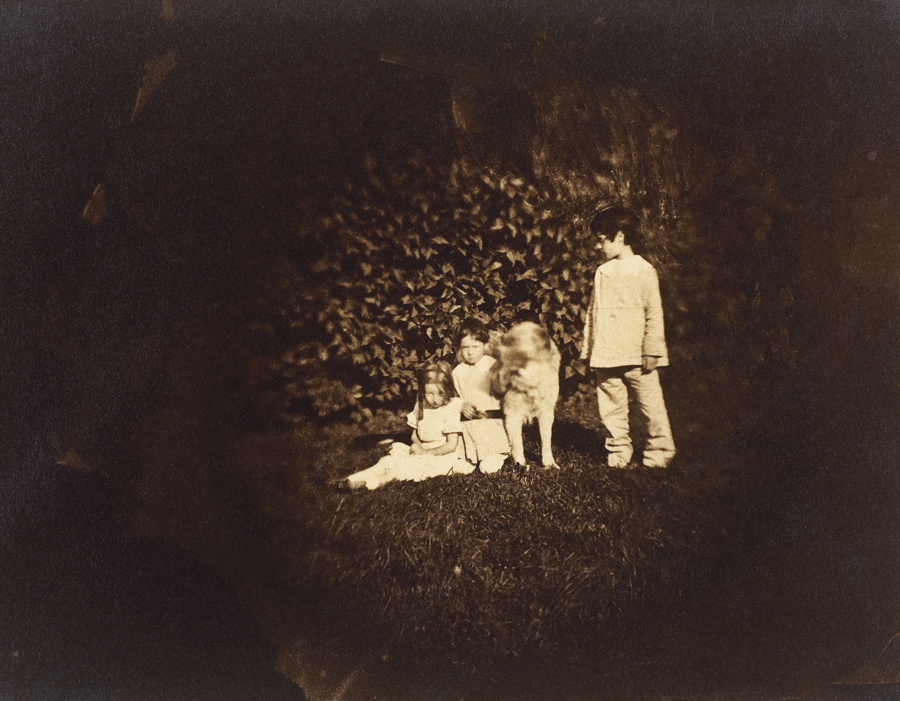
Charles Nègre, Three Children and Their Dog in a Park, ca. 1853, albumen print, 12.2 × 16.9 cm, Paris, Musée d’Orsay, purchase, 1981, PHO 1981 12.
Photo © Musée d’Orsay (dist. GrandPalaisRmn) / Patrice Schmidt
Initially, the photography collection developed around the so-called amateur photographers, or artist photographers, of the 1850s – ‘the most exciting period in terms of inventiveness and the craftsmanship of the work’43 – such as Édouard Baldus, Charles Nègre and Gustave Le Gray, but some Pictorialists of the late nineteenth and early twentieth centuries, in France and abroad, were also included,
Foreign photography has so far been virtually absent from French public collections for the period that the Orsay covers, despite the particularly close connections between the photographic cultures of France and England (throughout the nineteenth century), France and Italy (especially in the 1850s and 1860s) and, finally, France and the United States (from 1890 to 1915).44
Efforts extended to photography from several geographical areas, mainly in Europe and North America. The collection thus includes several groups from Central and Eastern Europe (German, Austrian, Czech and even Russian photographers) (fig. 5), but above all British works, with calotypists and Victorian amateurs of the 1860s, and American works, encompassing the US documentary tradition (1860–1880) with Timothy O’Sullivan and the Pictorialists (notably Edward Steichen and Alfred Stieglitz). From the outset, efforts also focused on obtaining family photographs taken by prominent figures in the arts and literature, including painters such as Bonnard and Degas and writers such as Hugo and Zola. Heilbrun has often emphasised the ‘fresh’ nature of amateur photography.45
Fig. 5
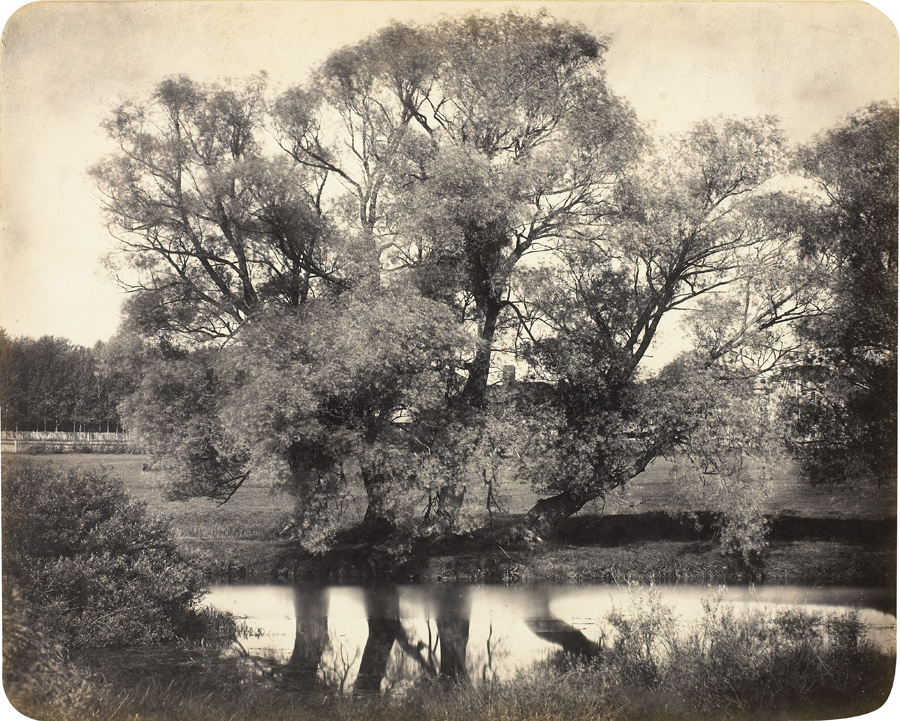
Scherer and Nabholz, Landscape, ca. 1870, albumen print, 27.0 × 33.2 cm, Paris, Musée d’Orsay, purchase, 1983, PHO 1983 196 1.
Photo © Musée d’Orsay (dist. GrandPalaisRmn) / Alexis Brandt
The collection’s main lines already emerged very clearly in the 1983 exhibition held at the Musée d’art et d’essai, located in the Palais de Tokyo,46 while Néagu and Heilbrun’s joint project took clearer form: ‘As with the other disciplines, emphasis is placed on the artistic aspect of the medium, although in many cases this does not exclude a documentary function.’47 This statement highlights a key challenge related to photography’s legitimacy: for a photograph to be recognised as art, it had to be collected as such. At the same time, the museum also assumed a prescriptive role, distinguishing what did and did not deserve a place in a history of photographic art. This determination to forge a canon had very practical consequences. As Heilbrun readily explained, priority was given to print quality over quantity and, above all, to what came to be known as tirages d’époque, or vintage prints: ‘We systematically sought out original prints, since they alone make it possible to understand the sensibility of a period or an artist.’48
Moving Collections
In 1987, Françoise Heilbrun noted that the collection comprised ‘around thirteen thousand works, of which a quarter [were] deposits and allocations from previously established collections, one-third gifts and the remainder acquisitions.’49 All these acquisitions were made in less than ten years, between 1979 and 1987. By comparison, it had taken collector and photographer Gabriel Cromer more than thirty years, from 1900 until his death in 1934, to build a collection of comparable size, albeit in a very different context – without competition from other institutions or collectors. In the Musée d’Orsay’s case, almost 5,000 items entered through deposits or allocations: for example, deposits from the Archives Photographiques du Patrimoine in 1982, the Manufacture de Sèvres in 1983, and, in 1986, the Louvre’s Egyptian antiquities department and the central library of the Musées Nationaux, in particular from their Théodule Devéria holdings.
During the Orsay’s planning phase, Laclotte played a major role in negotiations with various institutions; several came to nothing, including those with the Archives Nationales and the École Nationale des Ponts et Chaussées. The new museum’s objective was indeed to bring together substantial groups of works, and in this respect the concerns and sense of threat felt by other institutions were not entirely unfounded. Laclotte was a close friend of Jean Adhémar, then director of the BNF’s print and photography department, and is said to have agreed a kind of dividing line with him, promising not to encroach on engravings and prints provided that he could make inroads into photography.50 At the Orsay, this movement of collections reflected a strategy of negotiating with other institutions for groups considered underused, accompanied by a promise to give them greater prominence, as Heilbrun explained to a major American donor: ‘If [these institutions] hold photographs, do they actually want them? Do they fall within the remit and budget of the institutions that currently house them, or are they seen as a burden and neglected?’51
The aura of this new art museum in the heart of Paris helped attract some major gifts: in 1983, the Fondation Kodak-Pathé donated photographs from its corporate museum, established in the 1960s, believing that the collections it had assembled would enjoy greater visibility at the Musée d’Orsay;52 Baroness Minda de Gunzburg donated the complete run of the American journal Camera Work and the Robien-de-Bry gift brought prints by Auguste Salzmann, while Galerie Texbraun (1980–1986)53 and later the Braunschweig family made several notable gifts in the 1980s.
In addition to gifts and transfers of holdings, the photography collection was greatly enriched through purchases, thanks to substantial budgets54 and to assistance from the Commission Nationale de la Photographie, whose members included Agnès de Gouvion Saint-Cyr, inspector for photography at the Ministry of Culture. A journalist from Le Monde wrote in 1986 that photography received one-eighth of the Musée d’Orsay’s overall acquisitions budget.55 In reality, the amounts spent varied according to the year and the acquisitions proposed: 970,000 francs in 1988, 216,000 in 1989 and 230,900 in 1990.56 According to Quentin Bajac, who worked at the Musée d’Orsay early in his curatorial career, Heilbrun was prepared to pay high prices for works, considering the priority to be securing a particular item for the collection.
Created in just a few years, the collection reflects what was available on the photography market at the time. Certain things, such as Daguerre’s daguerreotypes, could simply no longer be obtained.57 But at the same time, the photography market was flourishing. The institution bought works from Harry Lunn, who lived on quai Voltaire just beside the museum, and from Texbraun (François Braunschweig and Hugues Autexier), Gérard Lévy, Alain Paviot and Hans Kraus.58 Acquisitions were made either through dealers and collectors or at public auction. Alongside museum collections, major private collections were also being built: André Jammes, Sam Wagstaff and Texbraun had led the way, followed by the Gilman Paper Company, with Pierre Apraxine as its buyer, and Roger Thérond. For many, the 1980s were a golden age.59 ‘In the museum world, Françoise Heilbrun at the Musée d’Orsay and Maria Morris Hambourg at the Metropolitan were partners. We may have been competitors at certain auctions, but most of the time we tried not to get in each other’s way.’60 Many outstanding prints were still available, but prices were high: two albums by Czechoslovak photographer František Drtikol were purchased in 1989 for 250,000 francs, and two daguerreotypes by Bisson and a print by Le Gray were acquired by the museum in 1990 for 250,000 and 300,000 francs, respectively, thanks to funding from the Commission Nationale de la Photographie.61 The Orsay’s detractors would sometimes accuse it of playing into the market’s hands. Yet showing that a museum could ‘pay the price’ also enabled it to ‘establish its place in the market’,62 that is, to be among the first to hear about forthcoming sales.
Championing a Photographic Vision
In their work together, Heilbrun and Néagu focused on ‘creative photography’, adopting an expression then used by Jean-Claude Lemagny and by collector and historian Helmut Gernsheim. At the 1983 exhibition, critics clearly understood this message, which asserted a vision of photographic history that ‘rejects all consideration of anecdote or even testimony about the period.’63 For specialist Sylviane de Decker Heftler, this presentation of the collections was ‘a fine illustration of the powers of photography when viewed through a taste formed by modern art.’ But she expressed a reservation: did such an approach not encourage ‘the constitution of a kind of canonical history, with its obligatory stages and automatic sequences’? She may have preferred ‘more imagination’ and a collection that would give greater scope to ‘the social flexibility of the medium’.64
Later, after the Musée d’Orsay opened to the public in 1986, Heilbrun and Néagu developed a primarily monographic approach intended to introduce the work of photographers and explore it from stylistic and formal perspectives. Numerous displays or ‘Orsay exhibitions’ were organised in the museum’s dedicated photography spaces: Peter Henry Emerson, Eugène Atget, Pierre Bonnard and Gustave Le Gray were surveyed in 1987–1988, Henri Rivière in 1988 and Paul-Émile Miot and Émile Zola in 1989. These were supplemented by exhibitions devoted to coherent bodies of work, such as Camera Work or American Pictorialism, as well as broader presentations of the collection (June–August 1988, then June–September 1992). Echoing the acquisitions, the exhibitions reveal a programme exploring the history of nineteenth-century photography that focused on aesthetics and formal concerns, leaving aside its more social or documentary aspects. Or rather, where the programme did address documentary or scientific photography, it was because it revealed something invisible to the human eye (such as the first X-rays of 1895–1896), or because the images testified to a specifically photographic vision distinct from pictorial representation.
This conception arguably reached its apogee with L’invention d’un regard, an exhibition celebrating the 150th anniversary of photography, organised in 1989 at the Musée d’Orsay in partnership with the BNF and curated by Françoise Heilbrun, Philippe Néagu and Bernard Marbot (fig. 6 and fig. 7). It presented photography as a language whose various points of entry include the negative, the medium, light, viewpoint, framing, movement, instantaneity and realism.65 Drawing on avant-garde photographic theories of the interwar period – particularly the writings of László Moholy-Nagy – the curators sought to transpose this modernist perspective onto nineteenth-century photography. As Lemagny perceptively observed, this represented ‘the official emergence of a non-event-based history in the field of photography’,66 far removed from the technical history that had long prevailed. L’invention d’un regard ultimately presented a history encompassing both the visual forms adopted by photography and the formal language specific to the medium. Press reviews were favourable;67 as for the public, entries in the exhibition visitors’ book suggest that many found it at least illuminating, if not transformative.68
Fig. 6
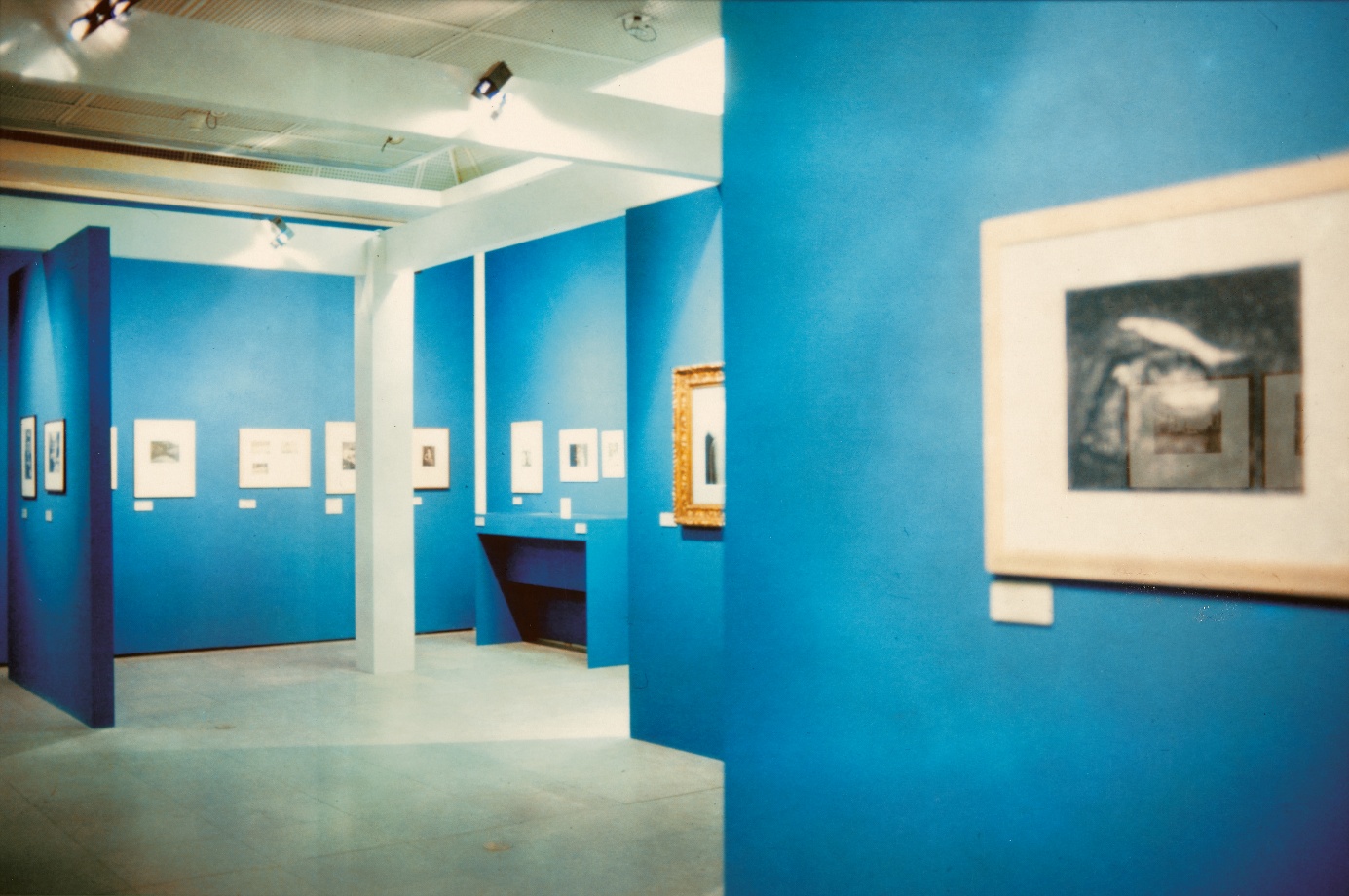
View of the exhibition L’invention d’un regard (1839–1918). Cent-cinquantenaire de la photographie, organised at the Musée d’Orsay from 2 October to 31 December 1989, Paris, Musée d’Orsay Documentation.
Photo courtesy of the Musée d’Orsay Documentation
Fig. 7
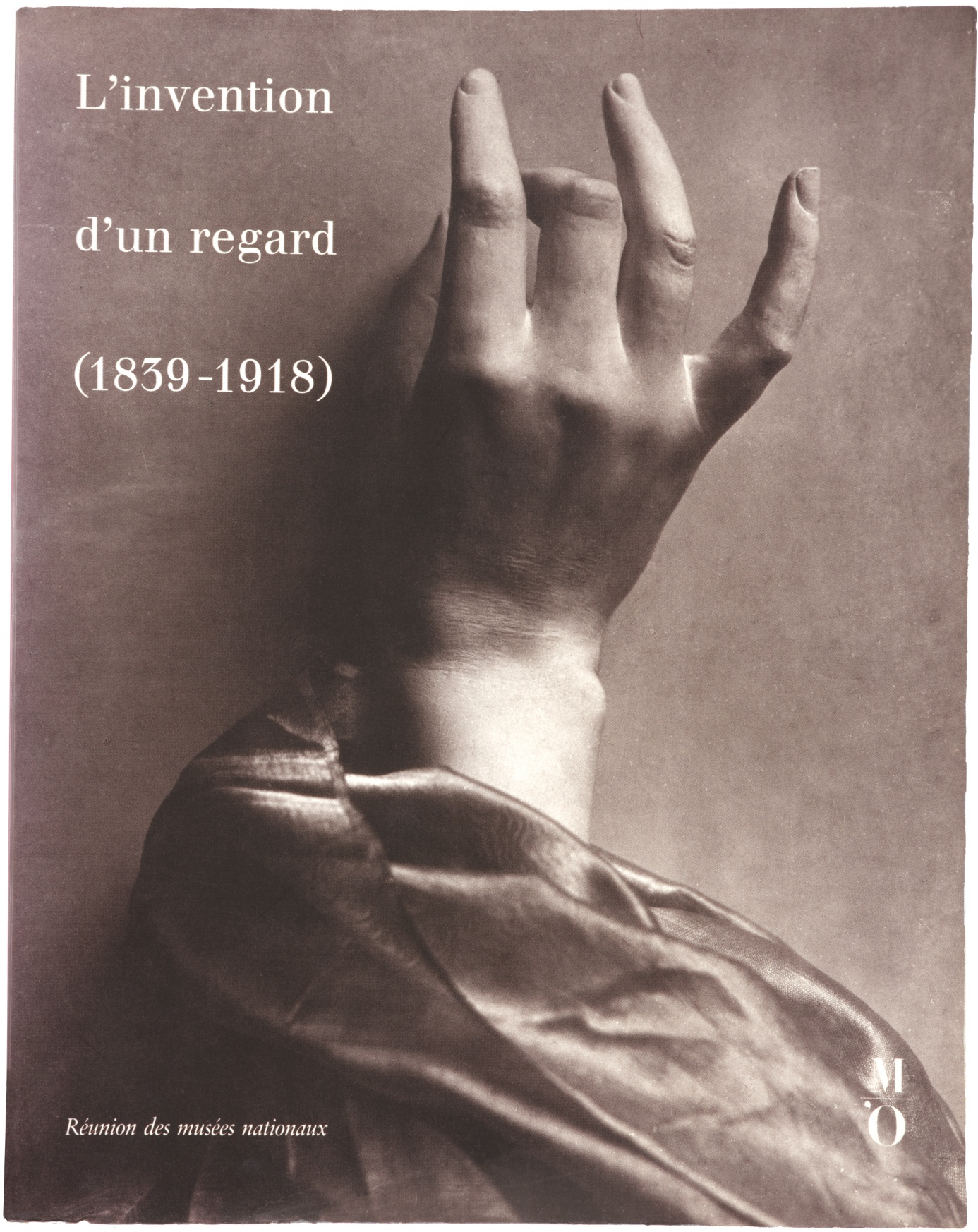
Françoise Heilbrun, Philippe Néagu and Bernard Marbot (eds.), L’invention d’un regard (1839–1918), exhibition catalogue, 1989. The cover features a photograph by Adolphe Bilordeaux, Study of a Plaster Hand, 1864 (albumen print from a dry collodion glass negative, deposited at the Musée d’Orsay by Mobilier National in 1979, DO 1979 84).
In 1994, Philippe Néagu began planning the exhibition Nadar. Les années créatrices with Françoise Heilbrun and Maria Morris Hambourg of the Met, in collaboration with the BNF, where Sylvie Aubenas had been appointed curator in 1993. This project focused specifically on the years 1854–1860, which the curators considered by far the most interesting in the photographer’s work, as they saw the invention of a striking portrait aesthetic: ‘Félix Nadar offers us a typical example of a paradox encountered in many great photographers. He was active over a very short period of time – only around six years.’69 The preparation of this exhibition was marked by the untimely death of Néagu, ‘the remarkable nineteenth-century photography specialist [who], together with Françoise Heilbrun, had built the Musée d’Orsay’s photography department from nothing.’70 In this sense, the show represented the end of a creative decade, the first exhilarating period in which a photography collection was both conceptualised and formed, laying the foundations for its subsequent expansion and renewal.
The author would like to express her heartfelt gratitude to Sylvie Aubenas, Quentin Bajac, Joëlle Bolloch, Dominique de Font-Réaulx, Thomas Galifot, Françoise Heilbrun, Françoise Le Coz, Jérôme Legrand, Hélène Pinet and Marie Robert for the interviews they so generously granted her, without which this article could not have taken its present form. She extends special thanks to Françoise Le Coz, Martine Kaufmann and Marie-Catherine Sahut, who made the meeting with Françoise Heilbrun possible, and to Chryséis Néagu for the valuable information she shared. Their careful readings made a genuine contribution to this article.