Met with the most enthusiastic acclaim but also the most scathing criticism, the opening of the Musée d’Orsay in December 1986 left no one indifferent (fig. 1). Across the Atlantic in particular, criticism soon emerged among specialists in the art of the second half of the nineteenth century.
Fig. 1
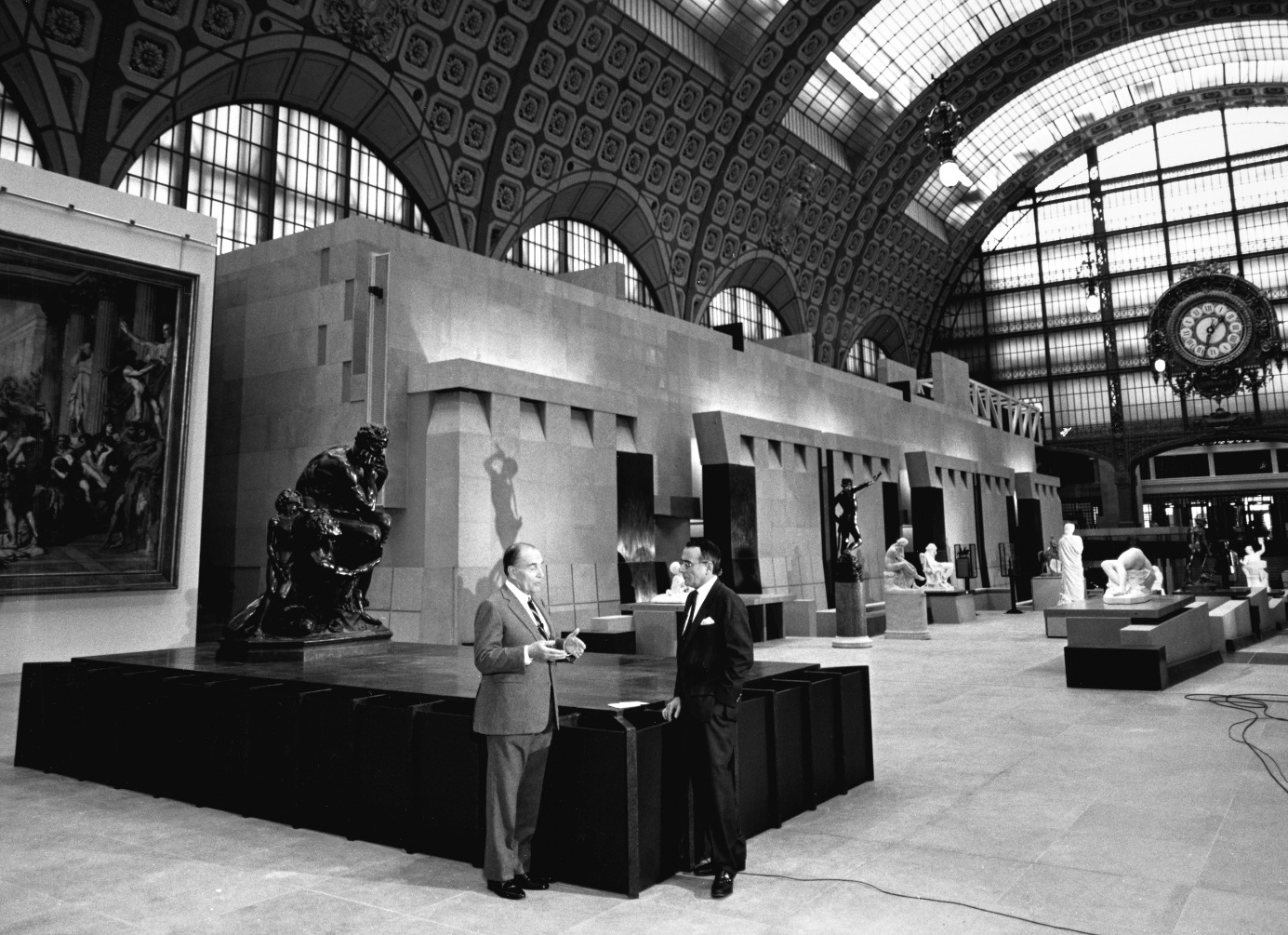
French President François Mitterrand interviewed in the Musée d’Orsay’s nave by journalist Yves Mourousi for TF1’s 1 pm news programme on the occasion of the museum’s opening, 1 December 1986, Paris, Musée d’Orsay Documentation.
Photo courtesy of the Musée d’Orsay Documentation / All rights reserved
It is worth recalling that, since the late 1960s, the chronological period represented by the Orsay had been a special focus for a number of art historians engaged in writing social histories of art.1 Building on a Marxist approach to the discipline since the late 1940s that had viewed art as the product of complex, concrete relationships across social, political and economic spheres, these scholars – who had diverse intellectual backgrounds but all worked at universities – strove in their publications to document artists’ participation in the political life of their time while revealing the ideological function of images and critiquing the mechanisms of exclusion at work in the discipline’s construction. This intellectual landscape, marked by political engagement and the adoption of more critical approaches to art, was the terrain of Patricia Mainardi and Linda Nochlin, two of the first academics to comment on the Orsay’s museography.
Fairly soon after the museum’s opening, in the summer of 1987, Mainardi published ‘Postmodern History at the Musée d’Orsay’, a substantial twenty-two-page illustrated article,2 while Nochlin made her views known in a debate piece titled ‘The Musée d’Orsay: A Symposium’, which brought together a range of perspectives.3 Although their respective contributions appeared in the pages of October and Art in America, two art journals in the United States known for the critical nature of their content and their focus on more contemporary art, the articles themselves, as well as their authors’ positions in the art world, were quite different. Admittedly, the two art historians were both Americans, both specialised in nineteenth-century French art, and both involved with the women’s rights movement4 – at a time, moreover, when feminist institutional critique was taking shape in the United States. But in the late 1980s, they were at different stages in their careers – Mainardi was born in 1942 and Nochlin in 1931. Mainardi had received her doctorate from the Graduate Center of the City University of New York only recently, in 1984, having written her dissertation on art and politics during the Second Empire, 5while Nochlin was fifty-seven and already had extensive experience in research, exhibition curation and teaching – she was then an instructor at New York University’s Institute of Fine Arts.6 Her remarks in Art in America incidentally appeared at the same time as her still-celebrated collection Women, Art, and Power and Other Essays.7 Their reflections on the Musée d’Orsay should be reconsidered in light of these contextual and biographical factors, for although both drew on detailed knowledge of the debates surrounding the museum’s creation in France, their conclusions were not quite the same. Mainardi leveraged her expertise as a historian of the Second Empire to explain exactly how, in her opinion, the Orsay should have presented this period’s history, whereas Nochlin opted to emphasise the museum’s social role, quickly suggesting ideas for its future development. While one sought to defend a rigorous vision of the past, criticising the Orsay for compromising historical truth, the other placed her faith in the museum’s political potential and lamented its failure to meet expectations of what a museum should be in the 1980s.
In the context of an art history attentive to social and political issues, their contributions to the debate over the Orsay’s inaugural museography should naturally be understood more broadly via the ‘ideological battles’ being fought on both sides of the Atlantic8 – battles that Matthieu Léglise identifies in relation to Manet, although they extended far beyond him:
The emergence of a ‘new art history’, of which [Timothy J.] Clark was one of the leading figures, alongside the consolidation of various fields of study, renewed the range of sources and approaches by introducing critical and reflexive tools (some of them controversial) that often amounted to radical challenges to the blend of positivism, formalism and biographical approaches that still prevailed in France in interpretations of nineteenth-century art. With its multiplicity of voices and trends, this innovative take on art history was beginning to gain ground in France, but encountered very strong resistance from the ‘internalists’, of whom [Françoise] Cachin may be regarded as a representative. This battle of objectives, methods, ideologies and intellectual genealogies heralded the great divide between what came to be known as ‘the two art histories’, despite the growing – and desirable – collaboration between museums and universities in recent years. The major debates, often North American in origin, surrounding the creation of the Musée d’Orsay in 1986 would follow these same lines of division, and as early as 1980 the journal Histoire et critique des Arts articulated the legitimate and partly justified fear that the future Musée d’Orsay would become essentially a museum of power and the bourgeoisie: the nineteenth-century bourgeoisie, its present-day counterpart and the bourgeoisie that turned Impressionism into a kind of ‘respectable bourgeois classicism’.9
France versus the United States, a museological perspective versus an academic vision, a formalist history versus a social history of art, traditionalism versus modernism: despite the inevitably schematic nature of this brief formulation, these polarities ultimately all point to the impossibility of a neutral museum. When considered in relation to the French political landscape at the time, they also more clearly highlight the complex cohabitation of aesthetic and political tendencies.10
Oscillating between a museum of social history and a museum of fine arts, how did the Orsay succeed in shifting the focus from stylistic ‘isms’ (Realism, Impressionism, Academicism, etc.) towards more theoretical and methodological ones (anachronism, revisionism, postmodernism, etc.)? Forty years on, revisiting Nochlin and Mainardi’s criticism allows us to examine how the Orsay has reconsidered art history through critical perspectives.
Defining Dates
The Musée d’Orsay first posed a challenge to nineteenth-century history in its planning stages, with debates over the starting and ending dates that the institution would be able to encompass and embody, above all through its collections. In their articles, Mainardi and Nochlin revisit the question of the chronological boundaries, which shaped the ambitious conception of history envisioned by the new institution, while pointing to an ambiguity: the Orsay sought to be a museum of the nineteenth century without encompassing the entire century.11 As artistic and historical dates entered the debate, the discussion gradually acquired a political dimension, with each successive French president bringing a different perspective during the museum’s long planning process:
But should it begin in 1830? 1848 or 1863? Pompidou favored 1860. Giscard attempted to push the date back to 1830 or even earlier, but the Louvre refused to part with works that would interrupt the David-to-Delacroix progression that has traditionally characterized the presentation of earlier nineteenth-century art.12
The Musée d’Orsay’s collections were meant to serve as a bridge between those of the Louvre, which needed to be relieved of overcrowding, and those of the Centre Pompidou, which focused on more contemporary art. The period assigned to the Orsay therefore had to be carefully defined and justified. Historian Madeleine Rebérioux’s appointment as vice-president of the EPMO, at the behest of President François Mitterrand, played a key role in this. An outspoken left-wing scholar specialising in the political and social history of the Third Republic, with research interests including Jean Jaurès, socialism, social movements and the working class, she argued that the dates should make greater sense from the perspective of history than of art history. Rebérioux immediately rejected the relevance of 1863, a date that held significance for painting – as the year of the Salon des Refusés and the advent of artistic ‘modernity’ – but was not a defining moment for the other arts represented at the Orsay, let alone one with any broader historical justification. In her view, 1848 had the merit of symbolising a clear historical break, ushering in a period of revolutions that definitively brought French monarchy to an end, while 1914 marked the advent of world war and the crisis of values that it precipitated. Regarding the end date, Michel Laclotte, who was then overseeing the museum design, argued instead for art-historical dates such as 1905–1908, which marked the beginnings of Fauvism and ushered art into the twentieth century. Nevertheless, it was a chronology based more on historical than aesthetic considerations that prevailed. Spanning sixty-six years, 1848–1914 was therefore both a relatively short period for a museum of this scale and an exceptionally rich one that now had to be presented through the museum’s displays.
Giving Form
The Orsay’s chronological scope was not the only source of controversy; its museography also provoked undeniably passionate and fascinating debate, in large part because the museum had initially announced its intention to present a social history of art.13 But between intention and execution, the initial promises and the final result, there were discrepancies that inevitably led to disappointment. According to Mainardi and Nochlin, the proponents of aesthetic experience and visual pleasure won the battle against those who championed historical rigour. The Impressionists and Post-Impressionists were relegated to the Galerie des Hauteurs, beneath the museum’s roof – Mainardi even uses the word ‘garret’14 – while academic sculpture and peinture pompier were given ample room to flourish in expansive, more readily accessible spaces, such as the central nave, flooded with overhead light and dominated by the massive clock recalling the building’s past as a railway station. Mainardi could not help but see parallels between this arrangement, compartmentalised into seventy sections and hierarchically distributed over three levels, and the interior of the typical Haussmannian apartment building commonly found in the nineteenth century (fig. 2): on the lower floors, bourgeois masters and mistresses often lived in opulence, while the other occupants became progressively poorer (domestic servants, members of bohemian literary and artistic circles, etc.) as one climbed upwards.
Fig. 2
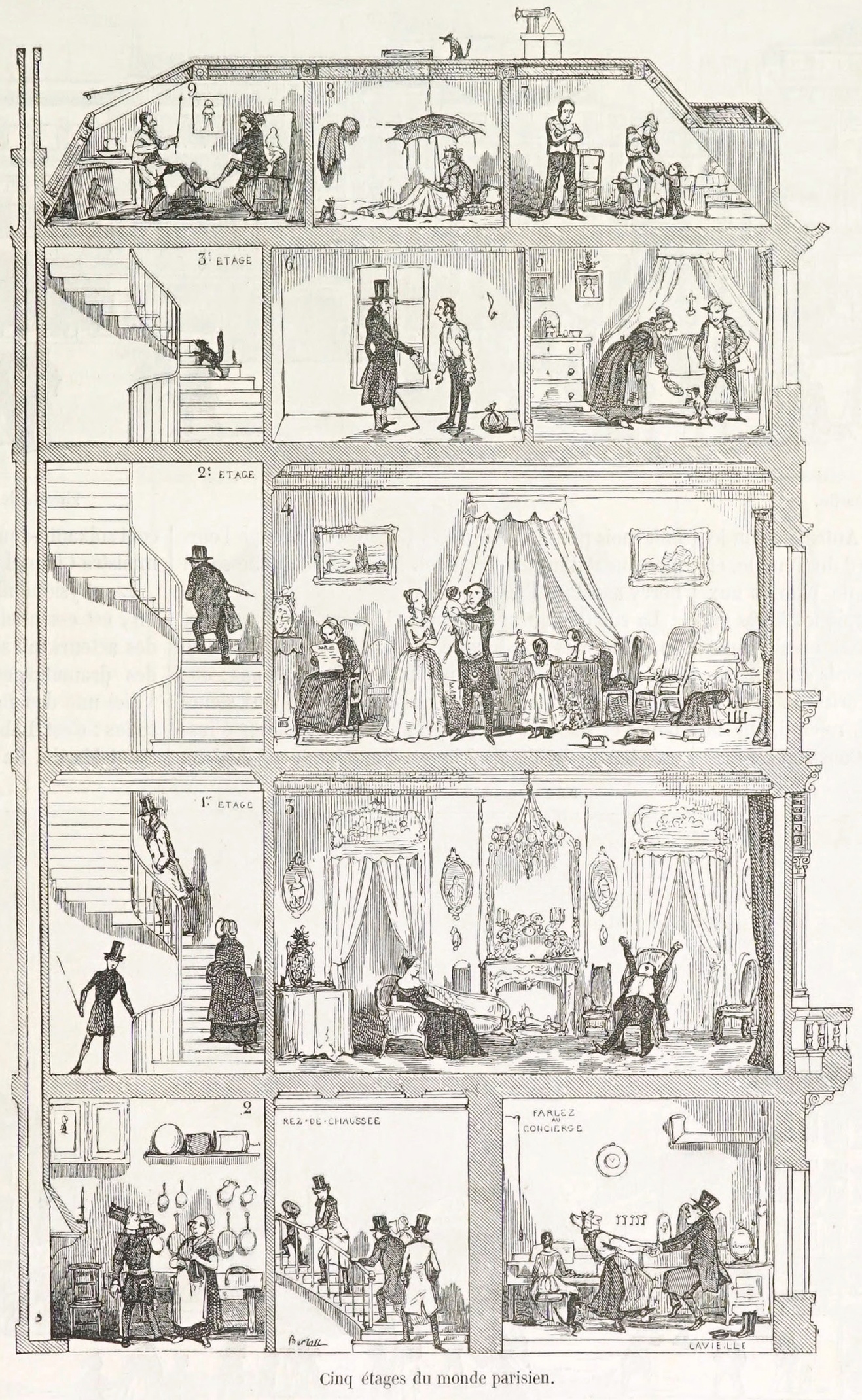
Edmond Texier, Tableau de Paris (Paris: Paulin et Le Chevalier, 1852), vol. 1, 65 (reproduced in Mainardi, 1987, 41).
This display of omnipotence was also castigated by Nochlin, who saw the Orsay’s museography as an echo of the Crystal Palace, the glass building constructed in London for the first Great Exhibition of 1851; in her view, this symbolised a nation’s cultural triumph in technological and imperial form. In response to the assertions of its director, Françoise Cachin, who firmly maintained that ‘[a] museum is not a book’15 and embraced the specificity of art history in relation to history (‘history, in an art museum, is art history’16), and to Laclotte’s conception, which drew on Victor Cousin’s theories of eclecticism to shine a light on the multitude of aesthetic tendencies that existed during the period, others countered that by stripping the works of their original messages, the chosen museography drew the period’s artistic production towards a museum culture of spectacle and popular entertainment. Nochlin went so far as to extend the metaphor of the ‘good museum’, likening it to an all-embracing, loving mother who permits everything and satisfies every audience, without daring to impose discipline or make difficult choices. In other words, as France Nerlich has summarised it, ‘with its professed neutrality, the Musée d’Orsay seemed to ignore or even refute the disruptive potential of its collections and to separate history (didactic displays, educational spaces, lectures) from the art exhibited in the galleries.’17
Fig. 3
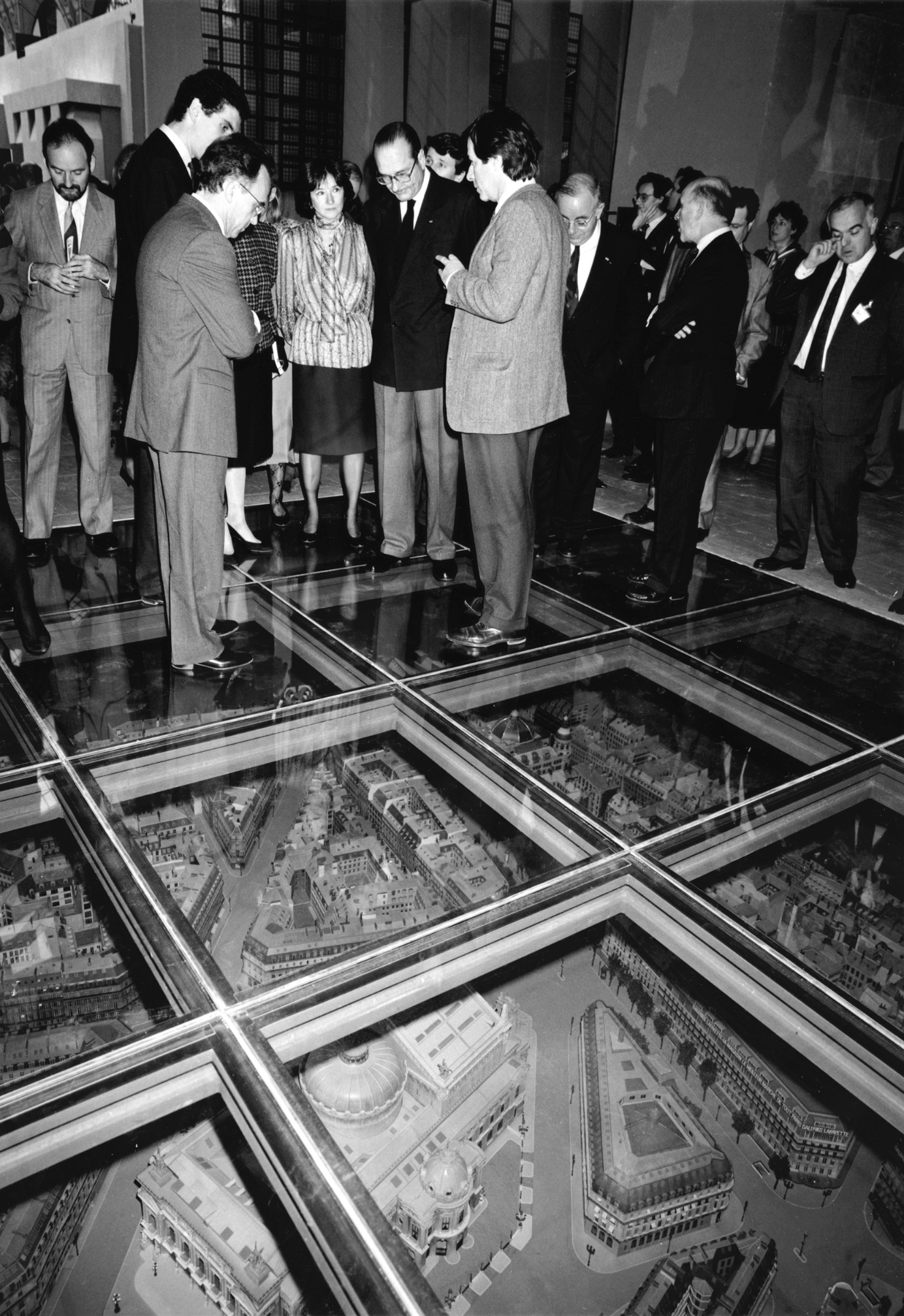
The Musée d’Orsay’s official opening, 2 December 1986. Paris, Musée d’Orsay Documentation. At centre, from left to right: Henri Loyrette, Jean Jenger, Françoise Cachin, Jacques Chirac, Richard Peduzzi, Jacques Rigaud and Michel Laclotte.
Photo courtesy of the Musée d’Orsay Documentation / All rights reserved
Emblematic of this problem was the poor reception of the maquette of the city’s Palais Garnier opera house, which Mainardi regarded as an example of ‘Disneyland’ culture,18 while others dismissed it as ‘French kitsch’.19 Exhibited at the far end of the nave by theatre set designer Richard Peduzzi (fig. 3), this maquette was installed beneath a transparent floor that allowed visitors to walk over it like ‘Superman’20 looking down on the capital. According to Mainardi, this miniature architecture said nothing about the urban politics of the period; it failed to do justice to the layout of its Haussmannian district, which had been the subject of a vast urban-planning project under Napoleon III. The renovation aimed primarily at improving sanitary conditions in this part of Paris, restoring security and establishing a military stronghold to be prepared for any future revolutions. For Mainardi and Nochlin, the social history of art originally envisaged was ultimately relegated to the margins of the Musée d’Orsay, notably to the galleries in the central nave’s periphery, where works by Daumier, Millet, Courbet, Manet and Monet were displayed. It also found a place in an extensive cultural and scholarly programme encompassing films, concerts, lectures by specialists in the period, a wall of objects and images providing a chronological overview of the century’s events and, last but not least, the ‘dossier’ exhibitions. One of the Musée d’Orsay’s innovations was the integration of these ‘small’ exhibitions into the circuit. Ranging from simple displays to more complex presentations and forming a ‘dossier’ or specific grouping, they were intended either to address literature, music or specific sociocultural aspects, or else to focus on a particular work or artist. These informational displays were more modest than temporary exhibitions, with which they could nevertheless enter into dialogue, but they were no less revealing of the ‘spirit of the times’ and helped enrich a visitor’s understanding of the art by placing it in a broader context.21 Finally, the creation of a cultural department with unprecedented financial and human resources helped position the museum as a place of learning poised to attract new audiences.22
Harnessing Potential
Despite her criticism, Linda Nochlin saw one virtue in the Musée d’Orsay leadership’s insistence on the primacy of the visual experience: it allowed visitors to move freely through the twists and turns of nineteenth-century art history without feeling constrained by a single narrative. This commitment to objectivity and a level presentation proved effective in ‘producing multiple, sometimes unintended, meanings and often generating contradictory readings’.23 It would therefore fall to successive directors to make the Orsay their own, in accordance with their respective visions of the institution, art history and the nineteenth century (fig. 4).
Fig. 4
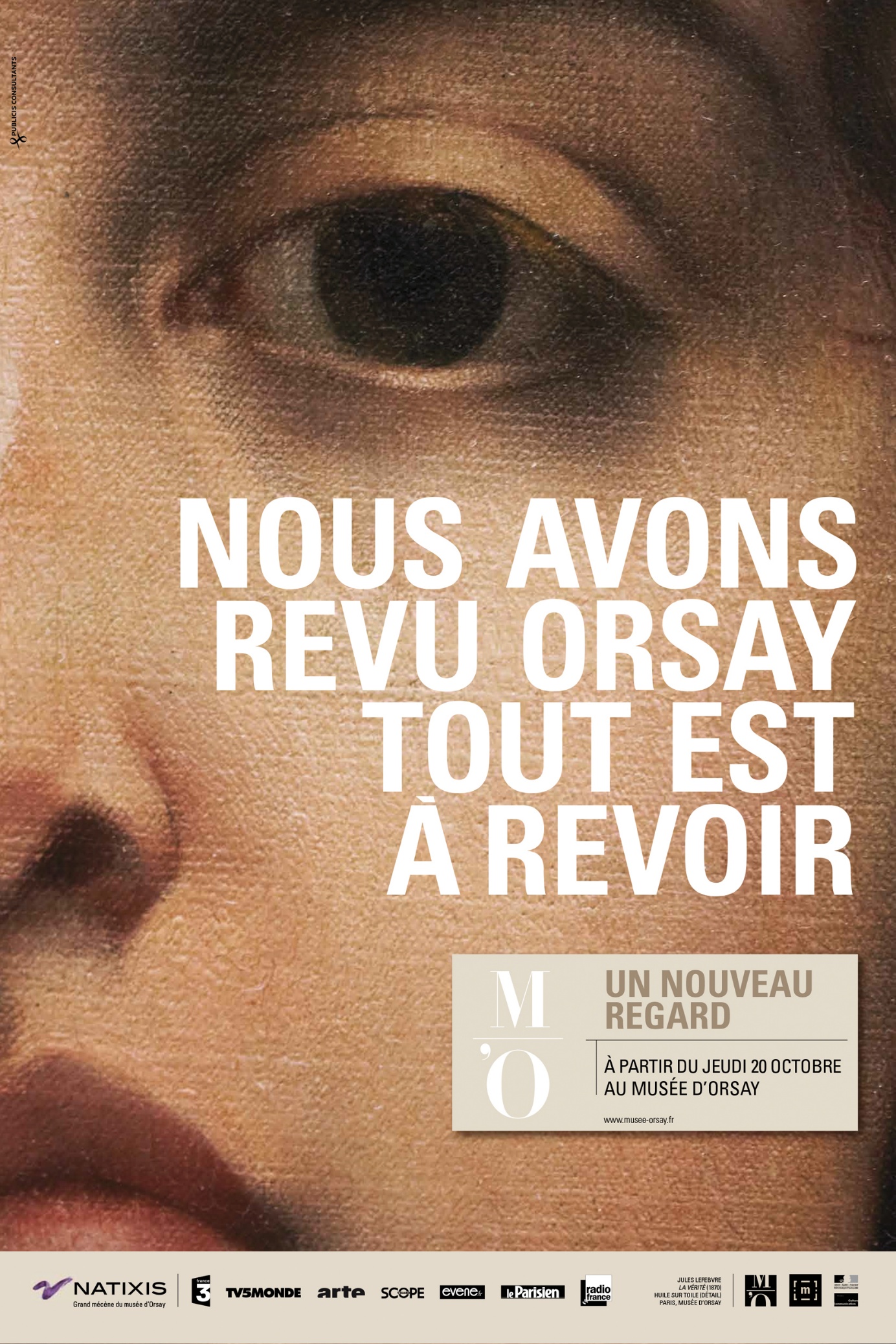
Poster from the ‘Nous avons revu Orsay. Tout est à revoir’ advertising campaign, autumn 2011, produced to mark the opening of the refurbished Impressionist galleries.
As for the permanent displays, while part of the Palais Garnier maquette survives today, the transformation of the Galerie des Hauteurs would, in a sense, address the objections that Mainardi and Nochlin had raised. To mark the museum’s twenty-fifth anniversary, director Guy Cogeval had the Impressionists and Post-Impressionists rehung in a larger, more accessible space. Breaking with the previous design, dark tones were introduced on the parquet flooring and gallery walls, and filtered fluorescent lighting kept illumination subdued so as to reveal the works without creating excessive reflections in the glass benches around which they were arranged. The Impressionists and Post-Impressionists were presented separately; while Van Gogh was now displayed in dialogue with Gauguin in the Galerie Françoise Cachin, certain spaces offered an unprecedented presentation of individual collections. Arguing that the Orsay’s new museography should be ‘a manifesto of modernity’, Cogeval boldly conceived a ‘Salle des Équivoques’ (fig. 5) that fully embraced experimentation with its juxtaposition of styles, and reopened the Pavillon Amont as a showcase designed to give international visibility in the decorative arts. In this respect, he was responding, albeit several years later, to Mainardi’s 1987 criticism of the predominantly French focus of the collections originally displayed.24
Fig. 5
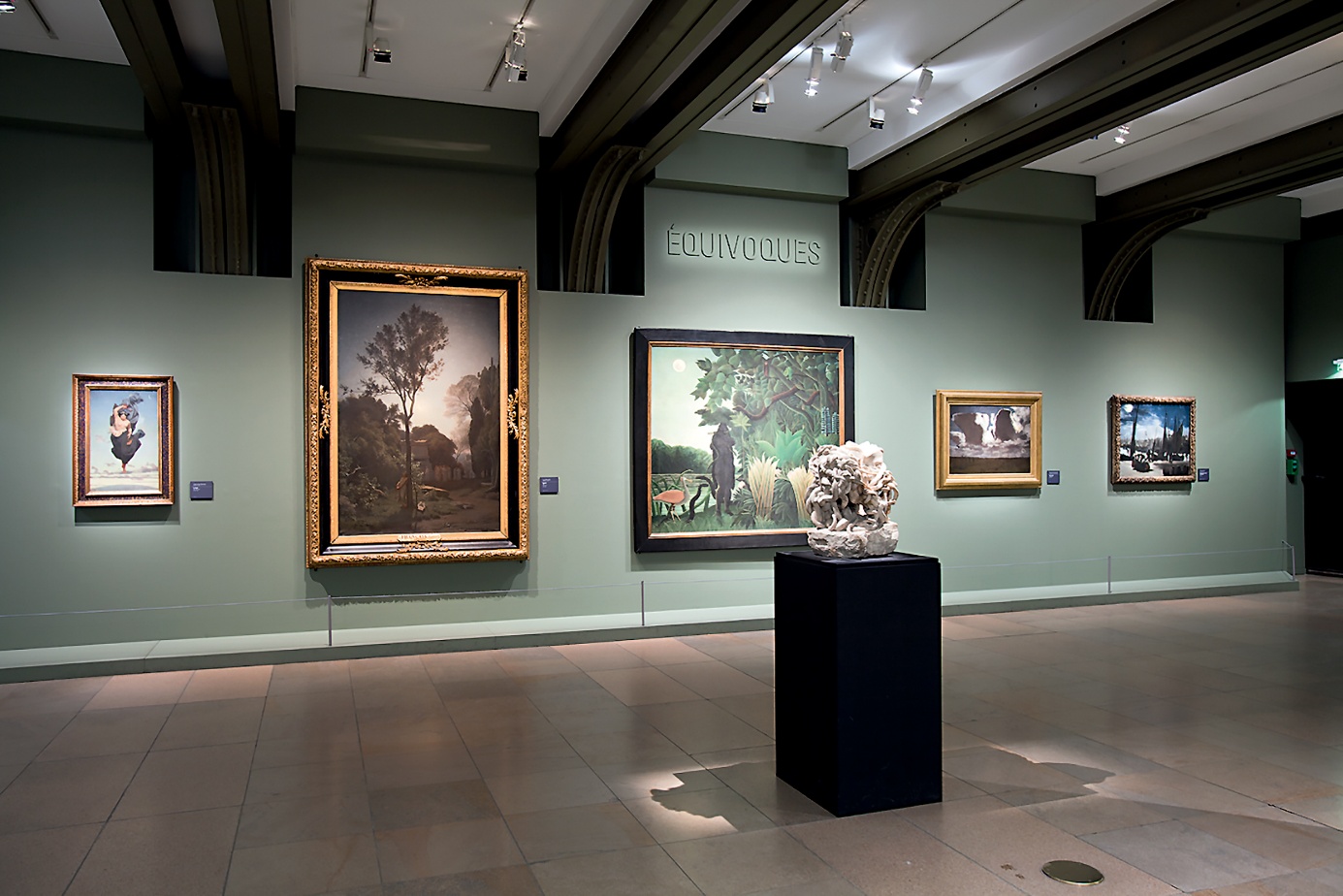
Salle des Équivoques, 2011.
Photo © Musée d’Orsay / Sophie Crépy
But the museum’s exhibition policy is undoubtedly what warrants closer attention, as it points to an initially tentative but subsequently sustained engagement with critical approaches to art. Even a cursory look at the list of past Orsay exhibitions reveals a clear shift, both in the choice of subjects and in curatorial perspectives, towards sociopolitical issues. Far from being absent at the outset, these concerns in fact migrated, moving from the ‘dossier’ exhibitions – which the museum discontinued in 1997 – to larger-scale temporary exhibitions, which explored them more ambitiously and visibly. Generally rewarded with considerable popularity among visitors, these exhibitions were sometimes further enhanced by targeted programming or renewed displays of the permanent collections. In 2019, some three decades after its opening, the museum unveiled its thematic display ‘Women, Art and Power in the Musée d’Orsay’s Collections’ (fig. 6) as a nod to Nochlin.25 The aim was to provide a contextual counterpoint to the major Berthe Morisot exhibition, which marked the first time the Musée d’Orsay – home to the world’s richest collection of Impressionist art – had offered a show focused exclusively on her work. For the occasion, the museum brought works out of storage and those otherwise on long-term loans, and even strengthened its acquisitions policy accordingly.26 The initiative sought to make women – as artists, patrons, critics or subjects depicted in works of art – more visible throughout the Musée d’Orsay. The women brought to the fore were not placed in a separate gallery but presented alongside and in dialogue with their peers, in a commendable effort to create a more gender-balanced presentation. In short, the intention was to highlight them without obscuring everything else. This fundamental act of recovery, which revealed the presence of women across all media and throughout the art world, must of course be applauded. Nevertheless, by adding only occasional counterpoints to the existing history, this approach ultimately resulted in a parallel narrative rather than a fundamental rethinking of the permanent displays.
Fig. 6
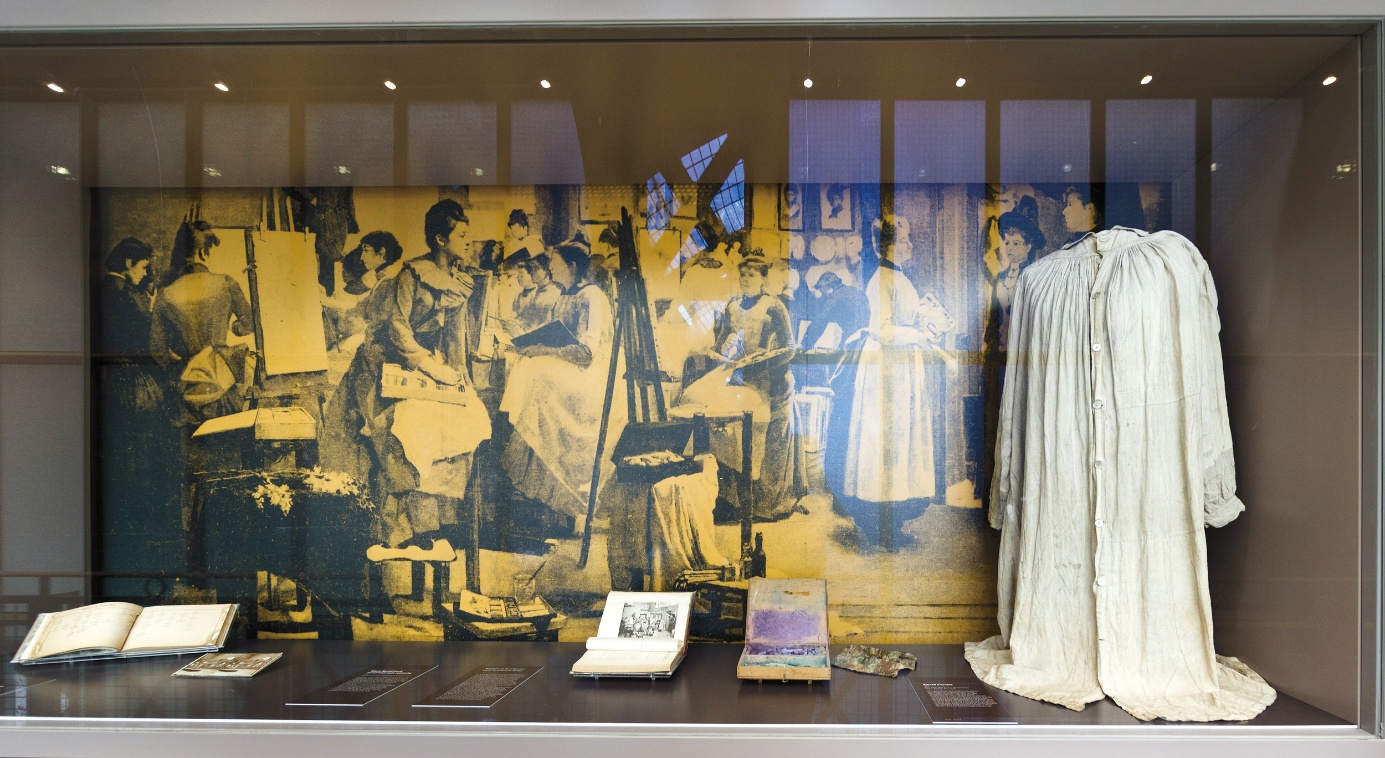
View of the ‘Femmes, art et pouvoir dans les collections du musée d’Orsay’ display, Paris, Musée d’Orsay (June–October 2019).
Photo © Musée d’Orsay / Sophie Crépy
These temporary presentations often functioned as testing grounds for new ideas and practices, particularly in mediation. Nochlin above all, convinced that the museum could ‘complement the work of the social history of art by giving spatial expression to gaps and absences’, used the Orsay’s museography as a starting point in 1988 to propose three exhibitions for her ‘ideal museum.’27 The first, resolutely multidisciplinary in both the media to be exhibited and the composition of its organising committee, would have been entitled Orientalism Deconstructed. The second exhibition would have been devoted to women’s work in the late nineteenth century – a theme that had not only been considered by Rebérioux28 but had also prompted plans for a ‘dossier’ exhibition that was ultimately never staged.29 Finally, the third would have explored myths of origins, based on the premise that mythologies surrounding prehistory and, more broadly, conceptions of so-called ‘primitive’ humans were constructed at a time marked by ideologies of progress and modernity.30 These three suggestions clearly reflect her vision of a social history of art suited to the museum, one that would encourage visitors to see with fresh eyes. In Nochlin’s conception, the museum was to move away from the triumphalist celebration of visual plenitude and instead devote itself to bringing the invisible into view:
A social history of art cannot be constructed out of what is visible, nor can it be created merely by adding additional objects–items of popular culture or other assorted documentation–to the space in which art works are shown. The function of a social history of art is precisely to reveal what is invisible–repressed, deleted, unrepresentable, scandalous, forgotten. A museum of the social history of art can only be envisaged as a vast project of restoration–of meaning and power to historical groups, movements and discourses which have remained invisible or distorted in the accepted modes of representation.31
While trenchant, the criticism Mainardi and Nochlin directed at the Musée d’Orsay in the late 1980s was well substantiated and, remarkably soon after its opening, anticipated issues that would prove crucial to the institution’s long-term future. Their Marxist and feminist intellectual backgrounds helped steer the museum towards a more explicit and deliberate engagement with the politics of the gaze. As Nochlin acknowledged in 1989, ‘the insights of feminism force the committed scholar to rethink what she or he is looking at and how she or he is looking at it: to look harder, more steadily, more critically, and more self-consciously.’32 Forty years later, the Orsay has unquestionably entered history, while raising questions about its ability to ‘make history’. It has challenged our perceptions of nineteenth-century art history by interrogating notions of taste and embracing the possibilities of a polymorphous, interdisciplinary museum with a productive approach that breaks down boundaries between different media. It has also profoundly re-examined what a museum can be. The Orsay has operated variously as a museum-event capturing a specific moment in French political history, a museum-laboratory centred on the brief but decisive period from 1848 to 1914, a museum-spectacle offering an experience of visual pleasure and, finally, a museum-school – inspired by the revolutionary model of the nineteenth-century museum – with a key role in bringing culture into the public sphere. Over its forty years of existence and expansion, the Orsay has succeeded in combining all these things. Its ability to play with categories has enabled it to keep alive the idea expressed four decades ago by historian Madeleine Rebérioux, namely that ‘history at the Orsay is [still] in the making’.33
Fig. 7
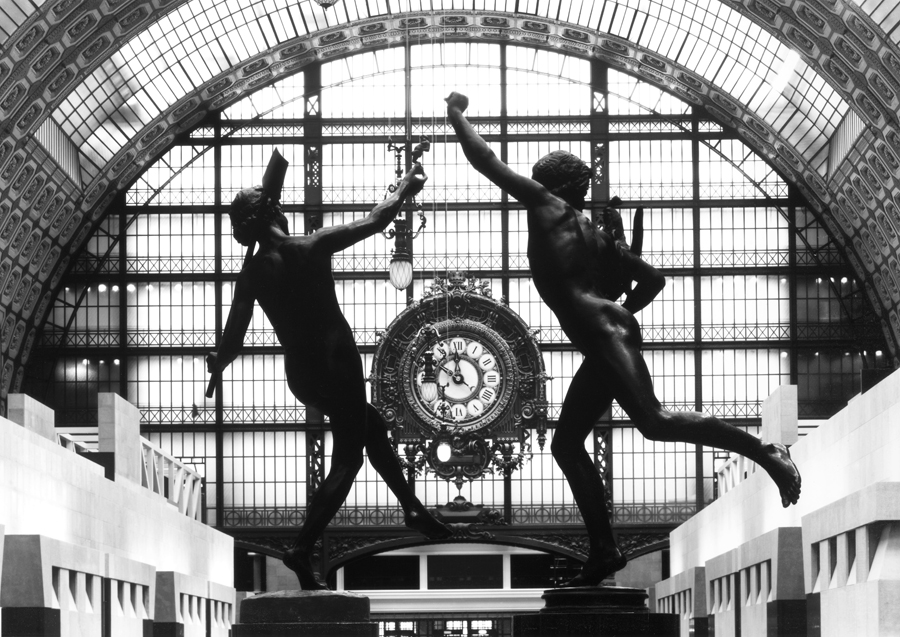
Jim Purcell, View of the Nave with The Winner of the Cockfight by Alexandre Falguière and A Lucky Find at Pompeii by Hippolyte Moulin, 1986, gelatine silver print, 21 × 27 cm, Paris, Musée d’Orsay Documentation, ODO 1996 22 1162 T.
Photo © Musée d’Orsay (dist. GrandPalaisRmn) / Jim Purcell
I would like to thank Clara Baudry, Joëlle Bolloch, Gilles Candar, Sabine Cazenave, Victor Claass, Sandrine Dziewolski, Flora Jaminais, Leïla Jarbouai, France Nerlich and Pierre Sesmat for the valuable information they generously shared with me. I am also grateful to the documentation staff, particularly Claire Guitton, for their assistance throughout the preparation of this article, and to the journal’s editorial team for their insightful suggestions.